Featured now: Start with Jaawac’s free beta, or request access to the AnchorScape pilot.
Try Jaawac Request AnchorScape

Product comparison / updated July 2026

Server Harbor vs Portainer, Rancher, Lens and tmux

Infrastructure dashboards know about servers and clusters. Terminal multiplexers know about shells. Agent dashboards know about their own tasks. Server Harbor joins those realities for teams operating many AI CLI sessions on the servers those agents are changing.

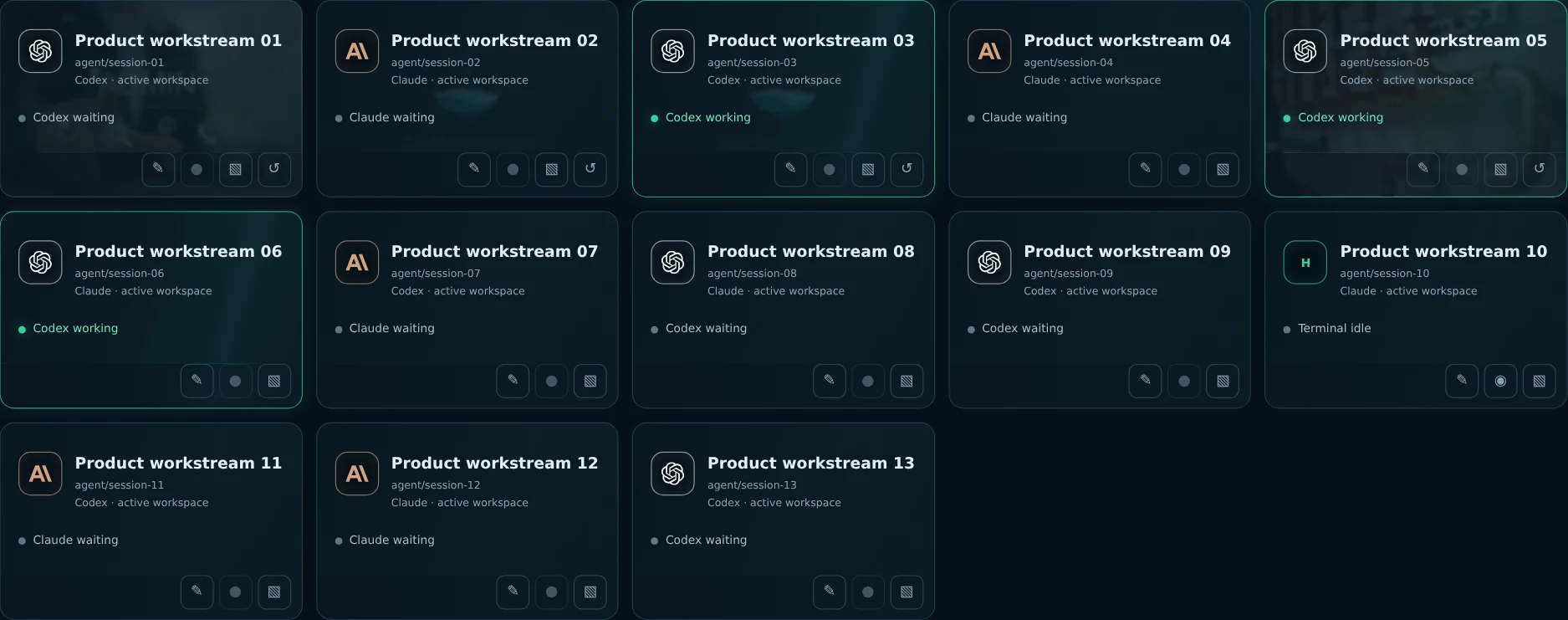
REAL SERVER HARBOR INTERFACE
The real Server Harbor session grid with thirteen sanitized Codex and Claude workstreams showing working and waiting states

Live product evidence: 13 simultaneous sessions in the captured operating view; Codex/Claude detection and six adapter families; readiness-aware queues; host/Kubernetes/traffic/log views; controlled attachments; localhost-only access; and content-minimising audit.

Direct market comparison

Compare the operating model, not a checklist.

The products overlap, but they are not interchangeable. These are the practical differences between Server Harbor and Portainer, Rancher, Lens, tmux and agent dashboards.

Market axisNamed alternativesServer Harbor
Container operationsPortainer provides a visual management layer for Docker, Kubernetes and edge environments.Server Harbor adds the human/agent work layer: live coding-agent sessions, reviewed input, queues and their immediate server context.
Kubernetes managementRancher manages clusters at enterprise scale; Lens provides a rich Kubernetes desktop view.Harbor is the local operations room where host, K8s, traffic and the terminal agents changing those systems meet.
Terminal multiplexingtmux is the proven session engine for persistent terminal work.Harbor keeps tmux underneath and adds discovery, provider-aware state, a visual grid, safe composer, attachments, queues and audit.
Agent control centresModel-specific dashboards coordinate tasks inside their own agent environment.Harbor coordinates heterogeneous CLI agents already running on your server and connects them to actual infrastructure operations.
01

tmux remains the proven session substrate

Server Harbor does not replace tmux with an unproven terminal. It discovers and presents tmux sessions as provider-aware cards, then adds live focus, safe input, attachments, readiness-aware queues and a useful audit trail.

02

Infrastructure context is beside the agent

Portainer, Rancher and Lens provide strong container or Kubernetes views. Harbor adds host health, traffic and governed logs to the same operating surface as Codex, Claude, Gemini, Aider, Kilo and OpenCode sessions.

03

Designed for private server operations

The current product binds to loopback and is reached through an SSH tunnel. A root-owned broker exposes only allowlisted, bounded log reads; message contents are excluded from its audit log; and terminal input stays locked until the operator deliberately enables it.

Start a conversation

See Server Harbor as the complete system.

Server Harbor is not an imagined future dashboard. During this work it was actively coordinating this Codex session and multiple other agents. The captured interface contains 13 real concurrent workstream cards with project names and paths replaced before the image was written.

Discuss Server Harbor